

Welcome Year 1448
 Entering the Blessed Year 1448 AH
 The Islamic year begins with the sacred month of Muharram, one of the four months honored by Allah. The others are Rajab, Dhul-Qa‘dah, and Dhul-Hijjah.Concerning the virtue of Muharram, the Messenger of Allah (SAW) described it as “the month of Allah”, and said, “The best of fasting after Ramadan is fasting in Allah’s month of Muharram.” (Reported in Muslim)
As Muslims navigating our daily lives according to the Gregorian calendar, we should take care not to lose connection with the Hijri calendar, which is rooted in our faith, identity, and history. We should strive to learn the names of its months, reflect on their significance, and appreciate the events that shaped our Ummah across more than 1,400 years.
Understanding our Islamic history strengthens our identity and deepens our sense of belonging. The origin of the Hijri calendar itself carries profound meaning. It commemorates the Hijrah, the migration of the Prophet (SAW) from Makkah to Madinah, a journey marked by sacrifice, trust in Allah, and the establishment of a just and faithful community.
Although the migration occurred in the month of Rabi‘ al-Awwal, the calendar was formally established during the caliphate of ‘Umar ibn al-Khattab (ra) several years later. A standardized calendar was needed to organize correspondence across the expanding Muslim lands, especially since some of the regions had their own date system.
After consultation, the companions chose the Hijrah as the starting point of the calendar. They also agreed that Muharram would mark the beginning of the year, symbolizing renewal, as it follows Dhul-Hijjah, when pilgrims return home purified from Hajj. Thus, the Hijri calendar came into being in the 17th year after the Hijrah.
Now, 1448 years later, we find ourselves blessed with Islam and honored to be part of the Ummah of our beloved Prophet (SAW) Each new year is not merely a passage of time, but an opportunity to return to Allah with sincerity, to renew our intentions, and to strive for His pleasure.

You may also like
-
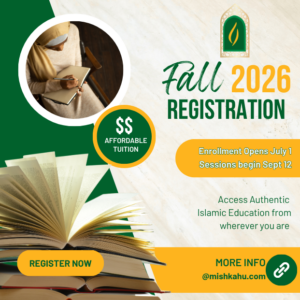
Fall 26 Registration Open
8 July, 2026 -

Ramadan Mubarak
18 February, 2026 -

New Contact Emails
11 January, 2026