

Social Structure

 About this course
This course will examine in detail the social structure of American society, the social issues of inequality in a stratified system and the role Muslim Americans can play in this system. How individuals and groups are differentiated in a society will be identified and discussed as well as ways of encouraging our own positive impact through an Islamic value-based lens. Understanding the intersection of the three main bases of inequality: class, race, and gender will help students understand how these are produced and reproduced over time as well as the way Islamic ideals can help to mitigate these social problems. We will examine why resources, opportunities, power, and status are distributed unequally within American society from a sociological and Islamic lens. This course will emphasize the influences of class, race, and gender on socioeconomic inequalities and how inequalities are reproduced and evolve in contemporary times in the United States. In this course, we will explore, from an Islamic perspective, how a Muslim American can understand American society and be an active participant in its improvement using various ayaat and ahadith to emphasize this. (3 credit hours)
About the Instructor(s)
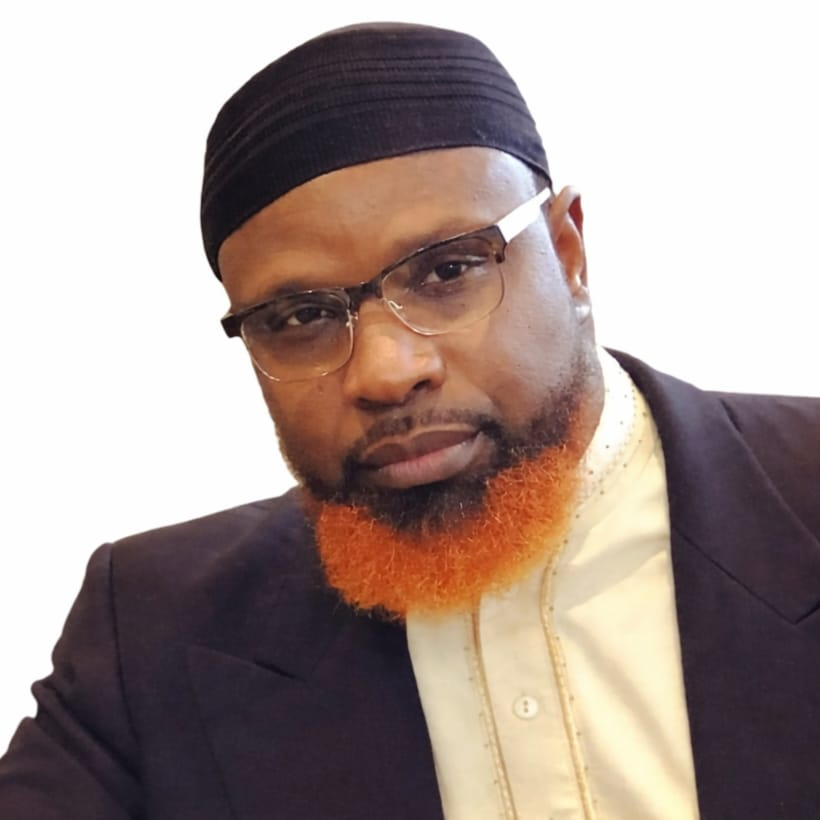
Ustadh Khalid Abdul-Aziz brings over 14 years of experience counseling individuals and families on a wide range of behavioral health issues, including addiction, anger management, marriage and family dynamics, and personal development. His approach is rooted in the Qur’an and authentic Sunnah, integrating Islamic principles with evidence-based practices. He is a mental health counselor, master addiction counselor, anger management specialist, and marriage counselor, affiliated with the Center for Islamic Counseling and Guidance (CICG). Ustadh Khalid is also the Founder and Director of the Dawah Center for Human Development and serves as Imam and Director of Masjid Bilal ibn Rabah in Jonesboro, GA, mentoring community members, delivering lectures, and guiding new Muslims and returning citizens. He has pursued advanced Islamic studies in Madinah, focusing on classical Islamic sciences and Arabic, combining scholarly knowledge with practical counseling to serve the holistic development of individuals and the broader Muslim community.

You may also like
-

Analytical Tafseer I
1 July, 2026 -

Arabic as a Second Language I
1 July, 2026 -
Islamic Creed II
1 July, 2026